
When Your Tennis Court Shows Its Age
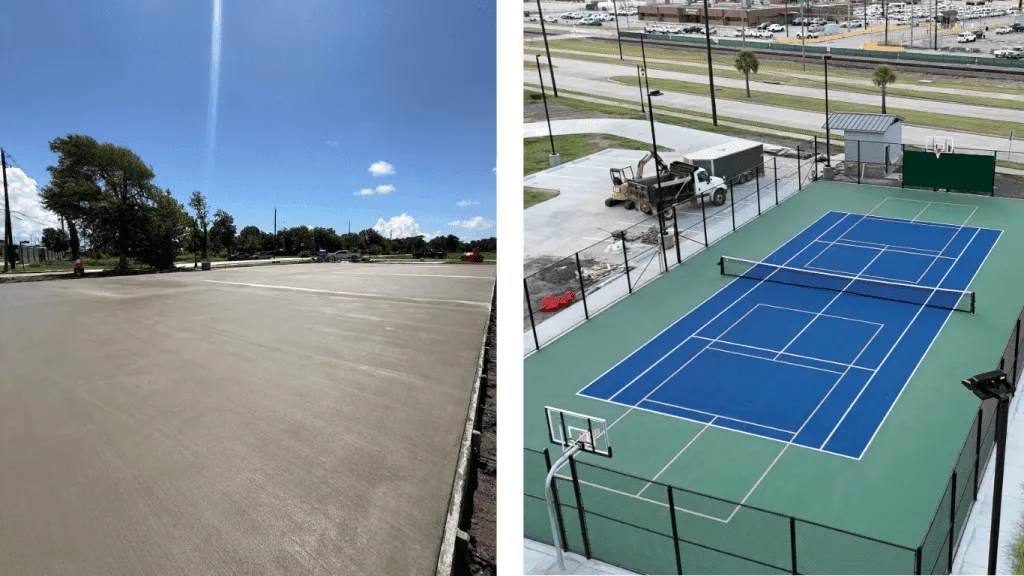
Just like magic—expert tennis court resurfacing brought this commercial space to life with a fresh blue-and-green playing surface and game court layout.
A tennis court should be a place for fun, fitness, and a safe playing experience — not frustration. Over time, even well-built hard courts, clay courts, synthetic grass courts, or game courts can show signs of wear and tear. You might notice fading color, surface cracks, small cracks forming, puddles after rain, low spots that collect water, or an uneven bounce that affects consistent ball bounce.
In Texas, courts face unique challenges: intense UV rays, extreme heat, and seasonal rains accelerate wear on your court’s existing surface. Proper tennis court resurfacing and regular maintenance can protect the court’s surface, enhance the playing experience, and extend its life. Whether you manage a backyard court, a school, or a game facility, knowing when to resurface a tennis court can save you from costly repairs and keep your court low maintenance.
At We Build Pickleball Courts, our team of game court builders specializes in tennis court installation, crack repair, and tennis court resurfacing in Austin, Dallas, Houston, and San Antonio. Here’s how to know when your existing surface needs attention.
Common Signs It’s Time to Resurface
If you notice any of the following issues on your court, it may be time to start a resurfacing project:
Cracks and Surface Damage
Even small cracks or surface cracks can worsen over time. Ignoring them allows further damage to the base and can lead to uneven surfaces and inconsistent ball bounce. Using crack filler, crack filling, or an acrylic patch binder can temporarily help, but a professional resurfacing process is often the best solution.
Fading Color and Court Lines
Faded color and disappearing court lines affect both aesthetics and play. Texas sun can bleach acrylic surfaces and reduce the variety of colors for lines and coatings. Using a quality acrylic resurfacer during resurfacing restores color, shock absorption, and line visibility for a professional finish.
Water Pooling and Drainage Issues
Standing water, birdbaths, or low spots after rain signal drainage issues. Water pooling can damage the base and accelerate wear and tear. Correcting drainage problems is part of a complete tennis court resurfacing job and helps maintain a low-maintenance court.
Uneven Bounce or Slippery Texture
If balls no longer bounce consistently or the court feels slick, it may be time to resurface a tennis court. Pressure washers or power washers can remove debris such as pine needles, but damaged surface material or an aging existing surface often requires professional resurfacing to restore a safe and enjoyable playing experience.
Texas-Specific Wear
High temperatures, UV exposure, and sudden weather swings can damage game surfaces faster in Austin, Dallas, Houston, and San Antonio. From hard courts and clay courts to synthetic turf and synthetic grass courts, the type of court determines how quickly wear and tear occurs.
How Often Should You Resurface
Most courts need resurfacing every 4–8 years, but timing depends on several factors:
- Private residential courts: Typically every 5–7 years
- School or community courts: Usually every 4–6 years
- High-use public or game facility courts: Often every 4–5 years
Other factors include:
- Usage frequency: High-traffic courts such as Pickleball Courts or Basketball Courts wear faster.
- Surface type: Acrylic, clay, hard courts, or synthetic grass require different maintenance schedules.
- Weather exposure: Full sun, heavy rains, and Texas climate extremes shorten the resurfacing cycle.
Regular maintenance and inspections help identify issues early, such as surface cracks, low spots, or water pooling, reducing future repair costs and keeping your court low maintenance.
The Cost of Waiting Too Long
Delaying tennis court resurfacing can be expensive. Common risks include:
- Base damage: Repairing a compromised base or foundation can far exceed the cost of a resurfacing project.
- Higher long-term repair costs: Small cracks today often require more expensive crack repair, crack filling, or a full resurfacing job tomorrow.
- Safety hazards: Slippery or uneven tennis court surfaces increase injury risk.
Several Texas clients who postponed resurfacing discovered that repairing their existing tennis court required a new surface, acrylic surface coating, and significant downtime — all avoidable with timely action. Knowing tennis court resurfacing costs in advance can help you plan your next resurfacing project and protect the existing surface.
Professional Inspection and Maintenance Tips
A professional tennis court resurfacing inspection includes:
- Evaluating surface material, surface cracks, and acrylic coating condition
- Checking drainage issues, birdbaths, and low spots
- Assessing court lines, color coating, and shock absorption
- Determining surface type and risk of further damage
Maintenance tips to extend your court’s life include:
- Keeping surfaces clean from pine needles and debris using a pressure washer or power washer
- Ensuring proper drainage to prevent water pooling
- Using recommended repair products like crack filler, acrylic patch binder, or acrylic resurfacer
- Following a maintenance schedule to prolong life of tennis court surfaces, Pickleball Courts, Basketball Courts, and other game courts
At We Build Pickleball Courts, we provide free inspections for homeowners, schools, and game facilities in Austin, Dallas, Houston, and San Antonio. Our team of game court builders ensures the resurfacing process is done professionally, whether it’s a new tennis court installation or resurfacing an existing surface. Using quality materials restores consistent ball bounce, shock absorption, and a low-maintenance court that looks and plays great for years.
Protect Your Court — and Your Investment
Timely tennis court resurfacing protects your investment, enhances the playing experience, and ensures safety. By spotting problems early and maintaining your hard courts, clay courts, or synthetic grass courts, you can avoid costly repairs and extend your court’s life.
Schedule your free court evaluation today with We Build Pickleball Courts — trusted tennis court builders and game surface experts serving Austin, Dallas, Houston, and San Antonio. Whether you need a full resurfacing job, acrylic coating, or minor crack repair, we help you restore your existing surface and achieve a professional, low-maintenance court that delivers consistent ball bounce and a high-quality playing experience.
📞 Call us at 832.922.7597 or 4095049910
📧 Email us at
📩 Or contact us online to get your free quote today!
